
If you’re just starting your Search Engine Optimization (SEO) journey, you’re in for an exciting ride! SEO is a powerful way to make your website shine on search engine results pages (SERPs), and as a beginner, getting a handle on the key terms is a fantastic first step. This article breaks down essential SEO concepts in a friendly way to help you provoke your learning and boost your website’s performance with confidence.
On-Page SEO
The optimization of elements directly on a webpage to improve rankings, such as:
- High-quality content
- Title tags & meta descriptions
- Header tags (H1, H2, H3, etc.)
- Internal linking
- Image optimization
- Keyword placement
Google E-E-A-T (Experience, Expertise, Authoritativeness, Trustworthiness)
A framework Google uses to assess content quality. It considers:
- Experience: First-hand knowledge or involvement with a topic.
- Expertise: Depth of knowledge on a subject.
- Authoritativeness: Credibility and reputation in the field.
- Trustworthiness: Reliability and transparency of the content.
Content Gap Analysis
The process of identifying missing or underdeveloped content topics that competitors are ranking for but your website is not. Content gap analysis helps improve SEO by creating new, relevant content to fill these gaps and attract more organic traffic.
Evergreen Content
Content that remains relevant and useful over time, driving consistent traffic to a website. Examples include “How-to” guides, FAQs, and industry best practices. Creating evergreen content is a key SEO strategy for long-term rankings.
In-Depth Articles
A type of long-form content designed to provide comprehensive information on a topic. These articles help establish authority and expertise, making them valuable for SEO and user engagement.
Duplicate Content Penalty
A ranking penalty imposed by search engines when a website has identical or very similar content across multiple pages. Duplicate content confuses search engines and can lead to lower rankings. Proper canonical tags and redirects help avoid this issue.
Alt Text (Alternative Text)
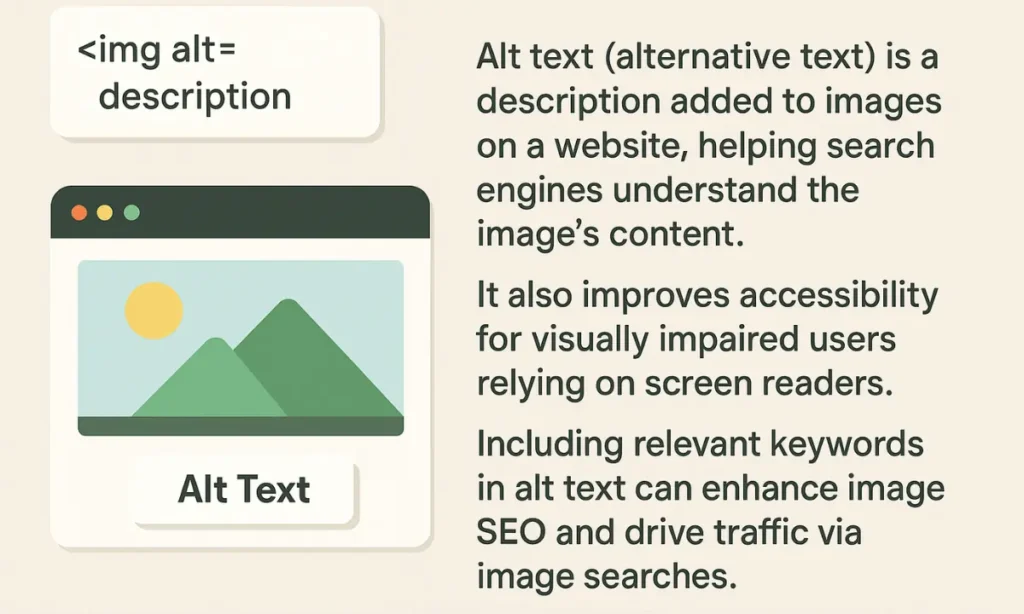
A short description is added to an image’s HTML (alt attribute) to help search engines and visually impaired users understand the image’s content. Alt text improves accessibility and SEO by making images indexable in search results.
Duplicate Content
Duplicate content refers to identical or very similar content appearing on multiple pages within a website or across different websites. Search engines may struggle to determine which version to rank, leading to lower rankings or indexing issues. Using canonical tags or redirecting duplicate pages can help resolve this issue.
Thin Content
Web pages with little to no valuable or unique information, often lacking depth and failing to meet user intent. Thin content can negatively impact SEO rankings and may result in Google penalties.
H1, H2, H3 Tags
These are heading tags used in HTML to structure content on a webpage.
- H1: The main heading, usually the title of the page (most important).
- H2: Subheadings that break the content into sections.
- H3: Further subheadings under H2 to provide more structure.
Proper use of heading tags improves readability and SEO by helping search engines understand the page hierarchy.
Title Tag
An HTML element that defines the title of a webpage. It appears in search engine results and browser tabs. A well-optimized title tag should be under 60 characters, include relevant keywords, and be compelling to encourage clicks.
Meta Tags
Meta tags are snippets of code that provide search engines with information about a webpage. The most important meta tags for SEO are the title tag (the clickable headline on SERPs) and the meta description (a brief summary of the page’s content). Well-crafted meta tags improve click-through rates and relevance.
Meta Description
A brief summary (usually 150–160 characters) of a webpage’s content, displayed in search engine results under the page title. While it doesn’t directly impact rankings, a well-written meta description can improve click-through rates (CTR).
Alt Text
Alt text (alternative text) is a description added to images on a website, helping search engines understand the image’s content. It also improves accessibility for visually impaired users relying on screen readers. Including relevant keywords in alt text can enhance image SEO and drive traffic via image searches.
Canonical Tag
A canonical tag (rel=”canonical”) is an HTML element that tells search engines which version of a page is the preferred or original one when there are multiple versions of similar content. It helps prevent duplicate content issues and ensures proper indexing of the correct page in search results.
User-Generated Content (UGC)
This refers to content created by users rather than the website owner, such as blog comments, forum posts, or product reviews. Google considers UGC when ranking pages, and websites must moderate it to prevent spam or low-quality content.
Keywords
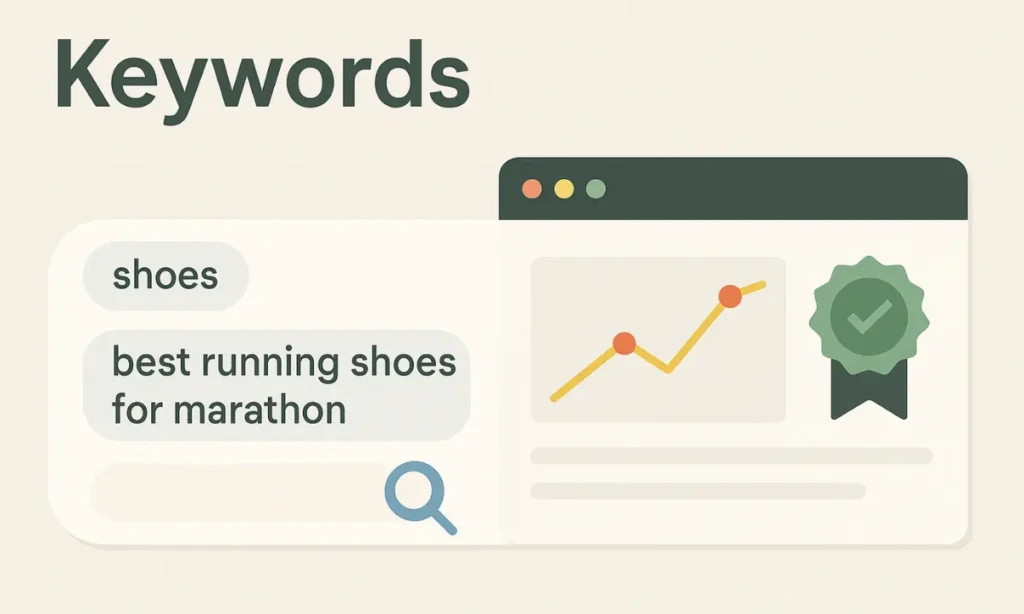
Keywords are the words or phrases that users type into search engines to find relevant content. They are the foundation of SEO, as they connect user queries to your website’s content. Keywords can be short-tail (e.g., “shoes”) or long-tail (e.g., “best running shoes for marathon”). Effective keyword research involves identifying terms with high search volume and low competition that align with your content.
Keywords based on Search Intent
The purpose behind a user’s search query. Search intent is typically categorized into:
- Informational Keywords: Looking for answers or knowledge.
- Navigational Keywords: Searching for a specific website or brand.
- Transactional Keywords: Ready to make a purchase or take action.
- Commercial Investigation Keywords: Comparing options before buying.
Understanding search intent helps in creating relevant content that ranks well.
Head Keywords
Short, high-volume search terms (usually one or two words) with broad intent. They are highly competitive and generate significant traffic, making it difficult for new websites to rank for them without strong SEO efforts.
Seed Keywords
Basic or broad keywords that form the foundation of keyword research and help generate more specific long-tail keyword variations. They are essential for building an effective keyword strategy and content plan.
Seasonal Keywords
Keywords that experience fluctuations in search volume based on specific times of the year, such as holidays, events, or trends. Businesses often optimize for seasonal keywords to take advantage of peak search periods.
Keyword Cannibalization
A situation where multiple pages on the same website target the same keyword, causing them to compete with each other in search results. This can weaken SEO performance and reduce ranking potential. Fixing it often involves consolidating content or adjusting keywords.
Keyword Density
The percentage of times a keyword appears in content compared to the total word count. While there is no fixed ideal percentage, overusing keywords (keyword stuffing) can harm SEO. Instead, using natural, relevant keyword placement is recommended.
Keyword Research
The process of finding and analyzing search terms that users enter into search engines. It helps website owners identify relevant keywords to target for SEO and content strategies, improving their chances of ranking higher in search results.
Latent Semantic Indexing (LSI) Keywords
Related terms and phrases that help search engines understand content context. While Google doesn’t explicitly use LSI, using semantically related words naturally can improve content relevance and SEO.
Latent Semantic Analysis (LSA)
A technique used in search engines to analyze relationships between words and understand context, helping Google recognize synonyms and related terms to deliver better search results. It improves content relevance by identifying semantic connections between different keywords.
Keyword Clustering
A strategy of grouping similar or related keywords together to optimize content for multiple search terms, improving SEO performance and relevance. This technique helps create more structured, topic-focused content that can rank for a variety of related queries.
Search Volume
The number of times a specific keyword or phrase is searched within a given timeframe, usually measured monthly. High search volume keywords attract more competition, while low-volume keywords may indicate niche or less competitive topics.
Off-Page SEO
SEO activities that happen outside the website to improve its authority and rankings, including:
- Link building (backlinks)
- Social media marketing
- Influencer outreach
- Brand mentions
Backlinks
Backlinks (also called inbound or incoming links) are links from one website to another. They are a major ranking factor in SEO because they act as a vote of confidence, signaling to search engines that a website is trustworthy and valuable. High-quality backlinks from authoritative sites can significantly boost a website’s search rankings.
No-Follow Links
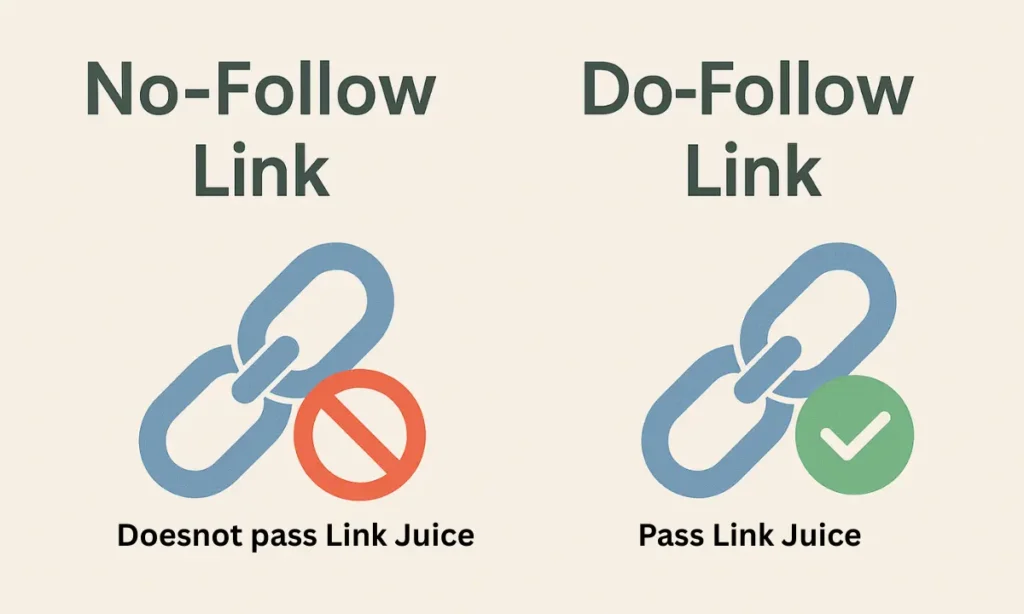
A type of hyperlink with a rel=”nofollow” attribute that tells search engines not to pass link authority (SEO value) to the linked page. These links are often used for paid links, user-generated content, or when linking to untrusted sources.
Do-Follow Link
A standard hyperlink that allows search engines to follow the link and pass SEO value (also known as “link juice”) to the destination page. These links help improve a website’s authority and rankings in search results.
Internal Linking
The practice of linking from one page to another within the same website. Internal links help with website navigation, distribute link equity (SEO value), and improve user experience by guiding visitors to relevant content.
External Links
External links, also known as outbound links, are hyperlinks on your website that point to other domains. These links can enhance your content’s credibility by referencing authoritative sources and provide value to users. Search engines may view external links to reputable sites as a signal of trustworthiness, but excessive or low-quality outbound links can harm your SEO. Balance is key when incorporating external links.
Sponsored Posts
A sponsored post is a piece of content published on a website, typically paid for by a brand or advertiser, to promote their products or services. In SEO, sponsored posts often include backlinks to the advertiser’s site, which can boost its authority if the hosting site is reputable. However, search engines like Google require sponsored posts to use “nofollow” or “sponsored” attributes to prevent manipulation of rankings, ensuring transparency.
Backlink Indexing
The process of getting backlinks recognized and indexed by search engines. If a backlink is not indexed, it may not contribute to a website’s ranking. Webmasters use indexing tools or ensure links come from high-quality, frequently crawled websites.
Link Velocity
The rate at which a website gains or loses backlinks over time. A natural and steady increase in link velocity is beneficial, while an unnatural spike (especially from low-quality sources) may signal manipulative link-building tactics.
Broken Backlinks
Backlinks that point to non-existent pages (404 errors) due to deleted or moved content. Fixing broken backlinks by redirecting or updating links can help maintain SEO value.
Competitor Backlink Analysis
The process of analyzing a competitor’s backlinks to identify high-quality link-building opportunities. This helps develop an effective backlink strategy by replicating or acquiring similar authoritative links.
Disavow Tool
A tool in Google Search Console that allows website owners to tell Google to ignore certain backlinks that may harm their rankings. This is used to prevent penalties from low-quality or spammy backlinks.
Toxic Backlinks
Low-quality or spammy backlinks can harm a website’s SEO and lead to Google penalties. These links often come from suspicious, irrelevant, or black-hat SEO sources.
Disavow Links
The act of telling Google to ignore certain toxic, low-quality, or spammy backlinks using the Google Disavow Tool. This is done to remove the negative impact of toxic or spammy backlinks that may harm SEO rankings.
Backlink Gap Analysis
A strategy used to identify high-quality backlinks that competitors have but your website does not. It helps discover link-building opportunities to improve rankings and domain authority.
Link Exchange (Reciprocal Linking)
A practice where two websites agree to link to each other. While some natural link exchanges are fine, excessive reciprocal linking can be seen as manipulative by search engines and may lead to penalties.
Tiered Link Building
A backlink strategy where backlinks are built in multiple levels (tiers) to pass link juice more effectively.
- Tier 1: High-quality backlinks directly linking to the target website.
- Tier 2: Links pointing to the Tier 1 backlinks, increasing their authority.
- Tier 3: Links pointing to Tier 2, further strengthening the structure.
Skyscraper Technique
A content marketing and link-building strategy where you:
- Find high-ranking content with lots of backlinks.
- Create a better, more in-depth version of it.
- Reach out to websites linking to the original content and ask them to link to your improved version instead.
Broken Link Building
A link-building strategy where you find broken (dead) links on other websites, create similar content, and reach out to the website owner, suggesting they replace the broken link with a link to your content.
Outreach Campaigns
The process of reaching out to bloggers, influencers, and webmasters to promote content and earn backlinks. Common outreach methods include email campaigns, guest posting, and HARO (Help a Reporter Out).
Link Reclamation
The process of identifying and reclaiming lost or unlinked mentions of your website. This includes fixing broken backlinks, converting brand mentions into links, or reclaiming links lost due to site migrations or page deletions.
HARO (Help a Reporter Out)
A platform connecting journalists with expert sources. SEO professionals use HARO to get backlinks from high-authority media websites by providing expert quotes or insights to journalists.
Co-Occurring Links
Links that appear on the same page or within the same content alongside other links, usually within a relevant topic or niche. Search engines analyze co-occurring links to understand the relationship between linked sites and assess content relevance.
Link Farming
A black-hat SEO practice where multiple websites create excessive, low-quality backlinks to manipulate search rankings. Link farms often contain irrelevant, spammy content and can lead to Google penalties.
Anchor Text
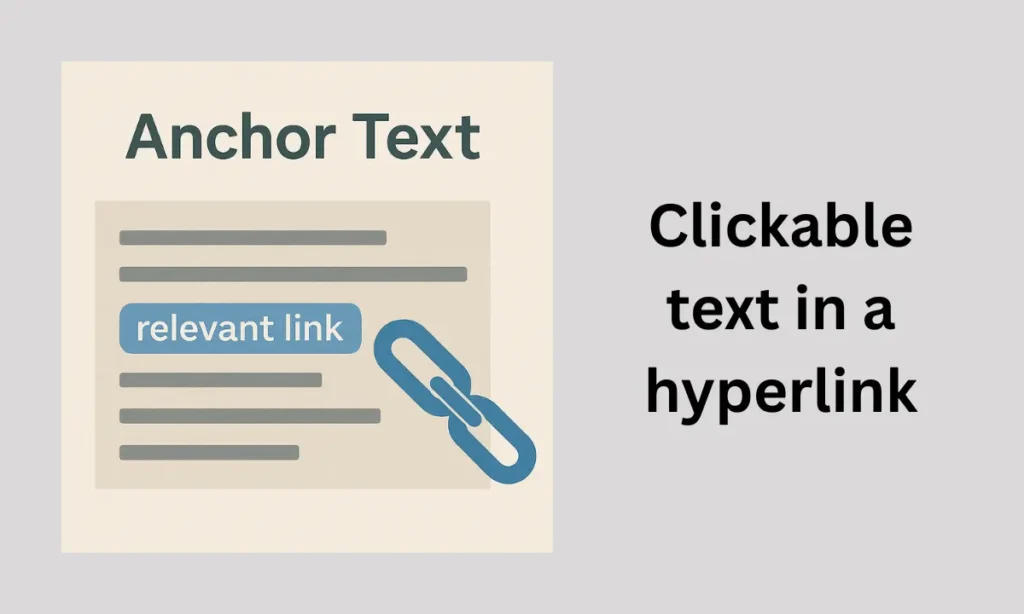
Anchor text is the clickable text in a hyperlink. It provides context to both users and search engines about the linked page’s content. Using relevant and keyword-rich anchor text can improve SEO, while spammy or irrelevant anchor text can lead to penalties.
Deep Linking
The practice of linking directly to a specific page or section within a website rather than just the homepage. Deep links improve user experience, increase engagement, and help search engines index internal pages more effectively.
Link Juice
The SEO value or ranking power is passed from one page to another through hyperlinks. High-authority websites passing link juice to another site can help improve their search rankings.
Link Authority
The strength or credibility of a website or webpage is based on the quality and quantity of backlinks it has. Websites with high link authority (e.g., links from reputable sources) tend to rank better in search engine results.
Referring Domains
The number of unique websites (domains) that link to a website. Even if multiple backlinks come from the same domain, it is counted as one referring domain. More high-quality referring domains generally improve a site’s authority and rankings.
Backlink Profile
The complete collection of backlinks pointing to a website. A good backlink profile includes links from authoritative, relevant, and diverse sources, while a poor profile may contain spammy or low-quality links.
Technical SEO
Optimizing the backend of a website to help search engines crawl, index, and understand content. Key aspects include:
- Site speed optimization
- Mobile-friendliness
- Secure HTTPS connection
- Structured data (schema markup)
- Fixing crawl errors (robots.txt, XML sitemaps)
Robots.txt
A text file in a website’s root directory that provides instructions to search engine crawlers about which pages they can or cannot crawl. It helps control which parts of a site are indexed but does not guarantee pages will be excluded from search results.
Schema Markup
A type of structured data added to a webpage’s HTML to help search engines understand content better. It can enhance search results with rich snippets, such as star ratings, event details, FAQs, and more.
Sitemap
A file (usually XML) that lists all the important pages of a website to help search engines index them efficiently. Sitemaps improve crawlability and SEO, especially for large or complex websites.
XML Sitemap
A structured list of all important pages on a website, written in XML format, that helps search engines find and index content efficiently. It is submitted to search engines via Google Search Console or Bing Webmaster Tools.
HTML Sitemap
A structured list of links to all important pages of a website, created in HTML format to help users and search engines navigate a site easily. It improves website accessibility and ensures search engines can index pages more efficiently.
Page Speed
The time it takes for a webpage to fully load. Faster page speeds improve user experience, reduce bounce rates, and are a ranking factor in Google’s algorithm. Optimizing images, using caching, and minimizing code can improve page speed.
Local SEO
A strategy that optimizes a website to rank better in local search results. It is essential for businesses with physical locations or serving specific geographic areas. Local SEO techniques include optimizing Google My Business, getting local citations, and using location-based keywords.
Geo-Targeting
The practice of delivering content, ads, or search results based on a user’s geographic location. Local SEO strategies, such as optimizing Google My Business and using location-specific keywords, help with geo-targeting.
Google My Business (GMB)
A free tool by Google that allows businesses to manage their online presence on Google Search and Maps. It helps businesses provide key details like address, hours, contact information, and customer reviews.
Local Citation
An online mention of a business’s name, address, and phone number (NAP) on websites, directories, and social platforms, important for local SEO. Consistent citations across various platforms help improve local search rankings and credibility.
Negative SEO
Malicious techniques aimed at harming a competitor’s search rankings, such as spammy backlinks, fake reviews, content scraping, or hacking. It can lead to penalties or ranking drops if search engines detect suspicious activity.
Voice Search Optimization
The process of optimizing a website’s content to rank better for voice search queries, which are typically more conversational and question-based. This includes using natural language, targeting long-tail keywords, and optimizing for featured snippets.
SERP (Search Engine Results Page)
The page displayed by search engines after a user enters a query. A SERP includes organic results, paid ads, featured snippets, images, videos, and other search features. The goal of SEO is to rank as high as possible on the SERP for relevant keywords.
Impressions
The number of times a webpage, ad, or search result is displayed on a user’s screen in search engine results pages (SERPs), regardless of whether it is clicked. A high number of impressions indicates visibility, but engagement depends on clicks and interactions.
Algorithm
An algorithm in SEO refers to the set of rules and calculations search engines like Google use to rank web pages in search results. These algorithms consider factors like content quality, backlinks, page speed, and user experience to determine a website’s ranking. Google’s search algorithm is constantly updated to improve search accuracy and fight spam.
Google PageRank
An algorithm developed by Google to rank web pages in search results based on the quantity and quality of backlinks. It measures the importance of pages by evaluating links as “votes” of credibility, with higher-ranked pages passing more authority to linked pages.
Zebra Update (Google)
A rumored or lesser-known Google algorithm update aimed at combating spam in social media and low-quality e-commerce sites. Unlike major updates like Panda or Penguin, Zebra focused on improving the quality of online transactions and reducing fraudulent activity.
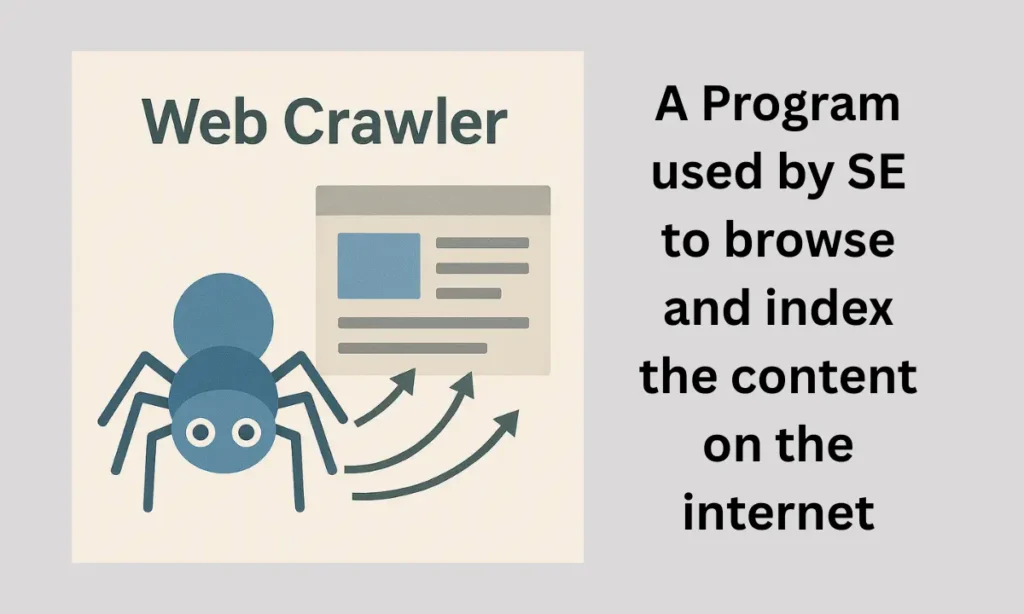
Web Crawler (Spider or Bot)
A program used by search engines to browse and index the content on the internet by following links from one page to another. Examples include Googlebot and Bingbot. Crawlers help search engines understand website content and structure.
Crawling
Crawling is the process by which search engine bots (also called crawlers or spiders) scan web pages to discover and index new or updated content. Google’s crawler, Googlebot, follows links and analyzes content to determine how pages should be ranked in search results. Ensuring proper site structure and using a robots.txt file can help manage crawling.
Indexing
The process by which search engines collect, store, and organize website content in their database. Indexed pages can appear in search results, while non-indexed pages remain invisible in searches. Google Search Console can help check and manage indexing issues.
Google Analytics
Google Analytics is a free tool provided by Google that helps website owners track and analyze website traffic, user behavior, and performance metrics. It provides insights into key SEO data, such as bounce rate, CTR, session duration, and traffic sources, allowing businesses to optimize their websites for better engagement and conversions.
Google Search Console
A free tool by Google that helps website owners monitor, maintain, and troubleshoot their site’s presence in Google Search results. It provides insights into indexing status, search performance, crawl errors, and other SEO-related data.
White Hat SEO
SEO practices that follow search engine guidelines and focus on long-term, ethical strategies. These include high-quality content, proper keyword usage, internal linking, and earning backlinks naturally.
Black Hat SEO
Unethical SEO techniques that attempt to manipulate search engine rankings. These include keyword stuffing, cloaking, and buying backlinks. Black hat SEO can lead to penalties or deindexing from search engines.
Gray Hat SEO
SEO techniques that fall between white hat and black hat practices. These methods are not explicitly forbidden but may exploit loopholes in search engine algorithms, such as aggressive link building or using expired domains.
User Experience (UX)
The overall experience a visitor has on a website, including design, navigation, loading speed, and ease of use. Good UX improves engagement, reduces bounce rates, and can positively impact SEO rankings.
Time on Page
The amount of time a user spends on a single webpage before navigating away. Longer time on page suggests engaging and relevant content, which can contribute to better search rankings.
Bounce Rate
Bounce rate is the percentage of visitors who leave a website after viewing only one page, without interacting further. A high bounce rate can indicate that users are not finding what they expected or that the page lacks engaging content. Search engines may interpret a high bounce rate as a sign of poor user experience, which can affect rankings.
Dwell Time
The amount of time a user spends on a webpage after clicking a search result before returning to the search engine results page (SERP). A longer dwell time suggests that the content is relevant and valuable, which may positively influence rankings.
Session Duration
The total time a user spends on a website during a single visit before exiting or becoming inactive. A higher session duration often indicates better user engagement and content relevance.
Mobile-First Indexing
A Google indexing approach where the mobile version of a website is prioritized for ranking and indexing. Websites must be mobile-friendly with responsive design, fast loading times, and easy navigation to rank well.
Breadcrumbs
A navigational aid that helps users and search engines understand a website’s hierarchy. Breadcrumbs appear at the top of a webpage and show the user’s path (e.g., Home > Blog > SEO Tips). They improve UX and SEO by making site navigation easier.
Cache
A stored version of a webpage that allows it to load faster for users who revisit it. Search engines like Google also store cached versions of pages to speed up indexing and retrieval in search results.
Cloaking
A black hat SEO technique where different content is shown to search engines and users. The goal is to manipulate rankings by tricking search engines into indexing misleading content. Cloaking is against Google’s guidelines and can lead to severe penalties.
Organic Ranking
A website’s position in search engine results that is achieved naturally through SEO practices rather than paid advertisements (PPC). Higher organic rankings typically result from quality content, backlinks, and proper on-page optimization.
Domain Rating (DR)
Domain Rating (DR) is a metric developed by SEO tools like Ahrefs to measure the strength of a website’s backlink profile on a scale of 0 to 100. A higher DR indicates a site has more high-quality backlinks from authoritative domains, which can positively influence its search engine rankings. While DR is not a direct Google ranking factor, it’s a useful indicator of a site’s overall SEO authority.
Domain Authority (DA)
Domain Authority (DA) is a score (ranging from 1 to 100) developed by Moz that predicts how well a website is likely to rank in search results. It is based on factors like backlinks, website age, and overall SEO performance. While DA is not a direct ranking factor for Google, a higher DA score generally indicates a stronger website with better SEO potential.
Page Authority (PA)
A score (developed by Moz) that predicts how well a specific webpage is likely to rank in search results. It ranges from 1 to 100, with higher scores indicating stronger ranking potential. PA is influenced by factors such as backlinks and content quality.
Spam Score (SS)
A metric developed by SEO tools (like Moz) to estimate the likelihood of a website being penalized by Google due to spammy backlinks, low-quality content, or black-hat SEO tactics. A high spam score can indicate potential SEO risks.
Trust Flow (TF)
A metric developed by Majestic SEO that measures the trustworthiness of a website based on the quality of its backlinks. Higher Trust Flow scores indicate stronger credibility and authority in search rankings.
Citation Flow (CF)
A metric developed by Majestic SEO that measures the quantity of backlinks pointing to a website, without considering their quality. A high CF means a site has many backlinks, but it does not necessarily indicate trustworthiness.
Authority Sites
A website that is highly trusted, well-established, and provides valuable, high-quality content. Authority sites typically have strong domain authority, a large number of backlinks, and high search engine rankings. Examples include Wikipedia, Forbes, and government websites.
Open Graph Tags
Meta tags are used by social media platforms (like Facebook, Twitter, and LinkedIn) to control how a webpage’s content appears when shared. They enhance user engagement by ensuring links display properly with images, titles, and descriptions.
Click-Through Rate (CTR)
Click-through rate (CTR) is the percentage of users who click on a link after seeing it in search results, ads, or email campaigns. It is calculated as:
CTR = (Clicks / Impressions) × 100%
A higher CTR indicates that a title and meta description are compelling and relevant to users. Optimizing title tags, meta descriptions, and structured data can improve CTR.
CTR Manipulation
Techniques used to artificially increase Click-Through Rate (CTR) on search engine results. This can include bots, fake clicks, or misleading headlines. Google may penalize sites that engage in unethical CTR manipulation.
Conversion Rate Optimization (CRO)
The process of improving a website’s elements (such as call-to-action buttons, forms, and landing pages) to increase the percentage of visitors who take a desired action, like signing up for a newsletter or making a purchase. CRO enhances both UX and business growth.
Cost Per Click (CPC)
A paid advertising metric that refers to the amount advertisers pay for each click on their ads. CPC is commonly used in Google Ads and varies based on competition, keyword demand, and ad quality.
Customer Journey
The complete process a user goes through from becoming aware of a product or service to making a purchase or taking an action. It includes stages like Awareness, Consideration, and Decision. Understanding the customer journey helps optimize SEO and marketing strategies.
Organic Traffic
Visitors who arrive at a website through unpaid (organic) search engine results, rather than paid ads. Organic traffic is a key goal of SEO efforts, as it typically brings high-quality, intent-driven users.
Referral Traffic
Visitors who land on a website by clicking a link from another website rather than searching for it directly or through search engines. High-quality referral traffic can improve a site’s authority and engagement.
Ranking Factors
The various criteria search engines use to determine how webpages rank in search results. These include content quality, backlinks, mobile-friendliness, page speed, user experience, and many others. Google uses hundreds of ranking factors in its algorithm.
URL Parameters
These are extra values added to a URL to modify content or track user behavior. They typically appear after a question mark (?) in a URL, such as ?category=shoes. Search engines may treat different parameter variations as separate pages, potentially causing duplicate content issues.
Rich Snippets
Enhanced search results that display additional information like star ratings, images, reviews, or event details, extracted from structured data on a webpage. They improve visibility and can increase click-through rates (CTR) in search results.
Website Related Terms
Exact Match Domain (EMD)
A domain name that exactly matches a target keyword (e.g., BestLaptops.com for “best laptops”). While EMDs were once highly effective for SEO, Google now prioritizes content quality and relevance over domain name keywords.
Domain Name System (DNS)
A system that translates domain names (e.g., example.com) into IP addresses that computers use to identify websites. DNS plays a role in website speed and security, which can indirectly impact SEO.
Responsive Design
A web design approach that ensures a website adapts seamlessly to different screen sizes and devices, including desktops, tablets, and smartphones. It improves user experience and is favored by Google for better mobile rankings.
YMYL (Your Money, Your Life) Pages
Web pages that can impact a person’s financial stability, health, safety, or well-being. Google applies stricter quality standards to YMYL pages, ensuring they come from authoritative, trustworthy sources. Examples include medical advice, financial planning, and legal information websites.